
Understanding Shoulder Impingement
Shoulder impingement occurs when the rotator cuff tendons get compressed between the humerus (upper arm bone) and acromion (shoulder blade).

This painful condition affects people who frequently raise their arms overhead, including:
- Office workers reaching for high shelves
- Athletes (swimmers, tennis players, baseball pitchers)
- Manual laborers (painters, electricians, construction workers)
- Active adults performing gym exercises incorrectly
Without proper treatment, what begins as occasional discomfort can progress to chronic pain and tendon damage.
Causes and Symptoms of Shoulder Impingement
Primary Causes
-
Structural Factors
- Bone spurs developing on the acromion
- Naturally curved or hooked acromion shape
- Thickened bursa or rotator cuff tendons
-
Muscle Imbalances
- Weak rotator cuff muscles failing to center the humerus
- Overdeveloped chest muscles pulling shoulders forward
- Poor scapular stability during arm movements
-
Repetitive Stress
- Frequent overhead work or activities
- Incorrect exercise techniques (especially shoulder presses)
- Poor throwing mechanics in sports
-
Postural Issues
- Rounded shoulders from prolonged sitting
- Forward head posture increasing shoulder strain
- Tight pectoral muscles limiting mobility
Common Symptoms
- Sharp pain when raising your arm between 60-120 degrees
- Dull ache after prolonged activity
- Weakness when lifting objects overhead
- Night pain when lying on the affected side
- Clicking/popping sensations during movement
- Difficulty with daily tasks like:
- Washing hair
- Putting on jackets
- Reaching for seatbelts
Shoulder Impingement Treatment
Our evidence-based approach focuses on relieving compression while restoring proper shoulder mechanics:
-
Comprehensive Assessment
- Detailed movement analysis to identify impingement positions
- Strength testing of rotator cuff and scapular muscles
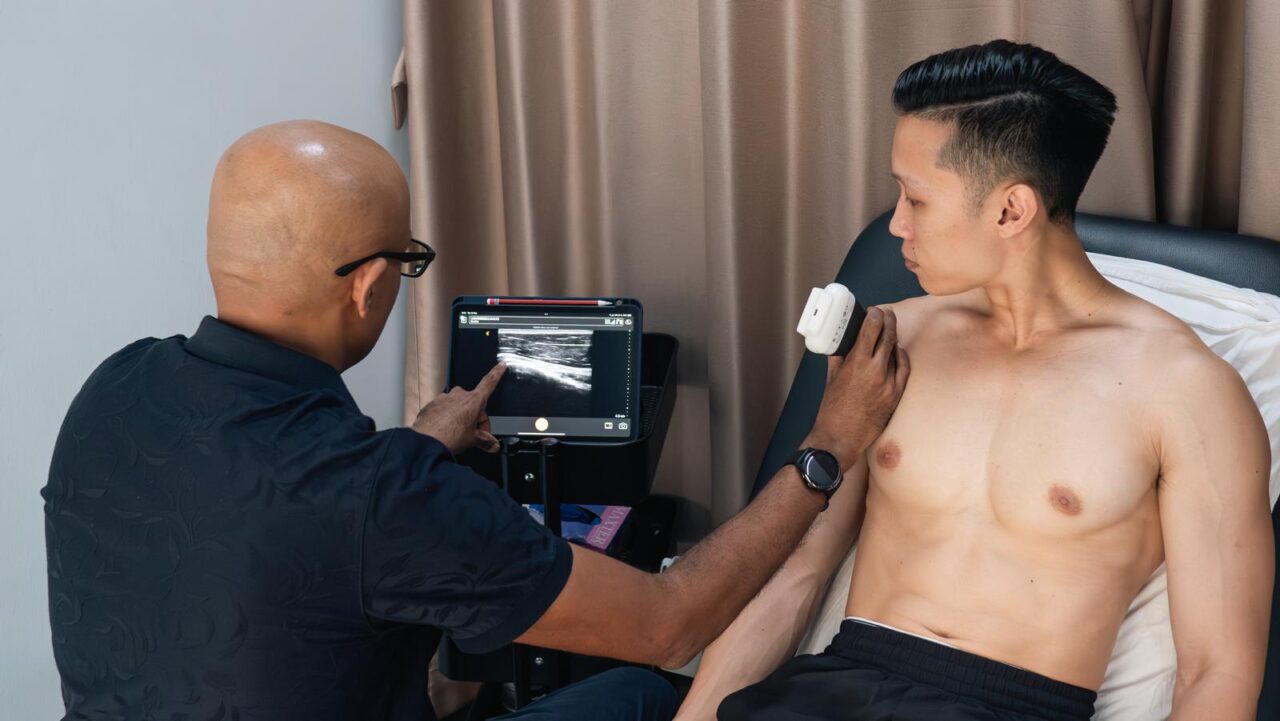
- Ultrasound imaging to assess tendon health
-
Personalized Treatment Plan
Firstly: Pain Reduction
- Manual therapy to improve joint mobility
- Modalities to decrease inflammation
- Activity modification guidance
Secondly: Corrective Exercise
- Rotator cuff strengthening
- Scapular stabilization training
- Postural correction exercises
Lastly: Functional Training
- Sport/work-specific movement retraining
- Gradual return to overhead activities
- Injury prevention education
-
Advanced Treatment Options
- Therapeutic ultrasound to promote healing
- Shockwave therapy for chronic cases
- Dry needling for muscle tightness
FAQ: Frequently Asked Questions About Shoulder Impingement
-
What is shoulder impingement?
Shoulder impingement is a condition where the tendons or soft tissues in the shoulder may become compressed during arm movement. This can contribute to shoulder pain, restricted movement, or discomfort, particularly during overhead activities.
-
What commonly contributes to shoulder impingement?
Shoulder impingement may be associated with repetitive overhead movements, muscle imbalance, postural strain, joint stiffness, or age-related structural changes. In some cases, symptoms may develop gradually over time.
-
What symptoms are commonly associated with shoulder impingement?
Commonly reported symptoms may include shoulder pain during lifting or reaching, reduced range of motion, stiffness, weakness, or discomfort when lying on the affected side, especially at night.
-
How is shoulder impingement evaluated?
Evaluation usually involves a clinical assessment, including medical history and physical examination. Where appropriate, imaging such as ultrasound, X-ray, or MRI may be used to support the assessment.
-
Is shoulder impingement only related to sports activities?
No. While sports can be a contributing factor, shoulder impingement may also occur due to prolonged desk work, repetitive occupational tasks, poor posture, or daily activities that place repeated stress on the shoulder.
-
What non-surgical management options may be discussed for shoulder impingement?
Depending on clinical findings, non-surgical options that may be discussed include activity modification, physiotherapy, rehabilitation exercises, pain management strategies, and posture correction, where clinically appropriate.
-
Can shoulder impingement affect upper body function?
Yes. Shoulder impingement may affect upper body movement and function, particularly tasks that involve lifting, reaching, or sustained arm use. Early assessment can help clarify contributing factors.
-
How shoulder impingement commonly managed over time?
Management typically involves a structured approach that may include education, gradual return to activity, physical conditioning, and follow-up review, guided by clinical assessment.
