
De Quervain’s Tenosynovitis: Understanding the Condition
De Quervain’s Tenosynovitis is a condition affecting the tendons on the radial (thumb) side of your wrist. It can cause pain, swelling, and difficulty moving your thumb and wrist, especially during gripping or twisting motions.
Although the name may sound complex, the condition is relatively common among people who perform repetitive wrist and thumb movements, such as typing, lifting a baby, gardening, or playing certain sports. Sometimes it’s called other names such as “mummy’s wrist”
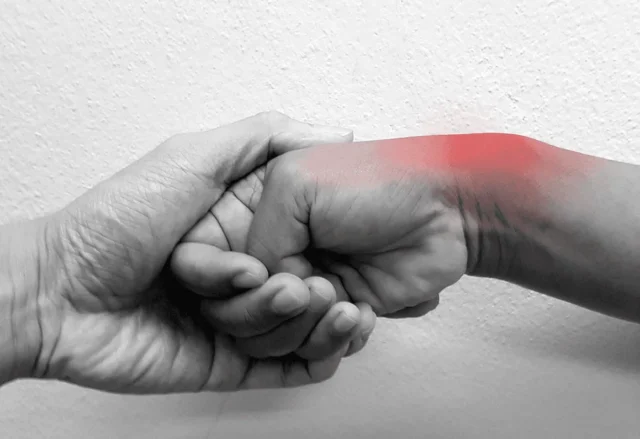
Why Do People Experience De Quervain’s Tenosynovitis?
Many people develop De Quervain’s Tenosynovitis due to overuse of the wrist and thumb. This overuse can irritate the sheath (lining) around the tendons, causing inflammation and discomfort.
For example:
- New parents may notice pain from frequently lifting their baby.
- Office workers may experience symptoms from prolonged typing or mouse use.
- Sports players like tennis or badminton athletes may develop the condition from repeated swinging motions.
- Craft enthusiasts such as knitters or artists can be affected due to fine, repetitive hand movements.
The key link between these examples is repetitive strain without adequate rest or support for the wrist and thumb.
What Causes De Quervain’s Tenosynovitis and What Are the Symptoms?
- Repetitive thumb and wrist movements in work, sports, or daily activities
- Injury to the wrist that causes scar tissue formation
- Inflammatory conditions such as arthritis
- Hormonal changes during pregnancy or postpartum, which may increase tendon sensitivity
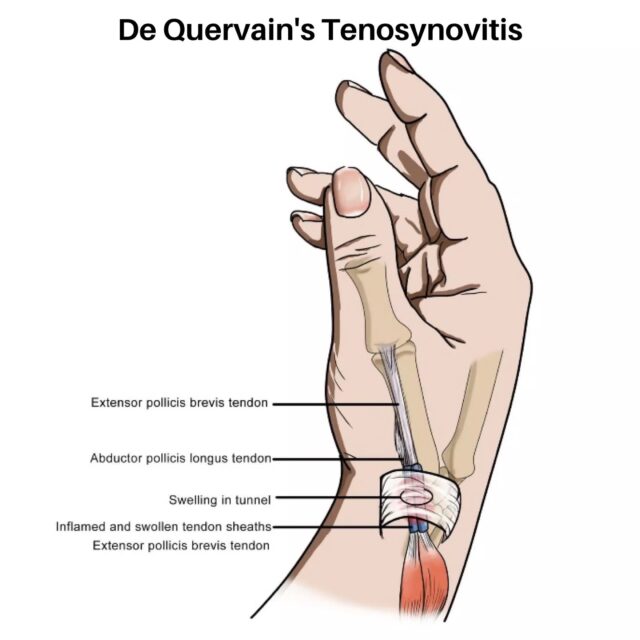
Common Symptoms
If you have De Quervain’s, you may notice:
- Pain or tenderness on the thumb side of the wrist
- Swelling near the base of the thumb
- A limitation when moving the thumb
- Difficulty gripping objects or twisting the wrist
- Pain that worsens with repetitive thumb movements
How Do You Relieve De Quervain’s Tenosynovitis?
Relieving this condition often involves reducing strain on the affected tendons and addressing inflammation. Depending on the severity, treatment may include:
- Activity Modification – Avoiding or reducing repetitive movements that trigger symptoms.
- Supportive Devices – Wearing a thumb splint or brace to rest the tendons.
- Ice Therapy – Applying cold packs to help reduce swelling.
- Stretching and Strengthening Exercises – Under professional guidance to restore flexibility and function.
- Medications – Such as non-prescription anti-inflammatory tablets or creams for short-term relief.
- Professional Non-Surgical Treatments – targeted therapy techniques tailored to your condition.
